
Compass Sues NWMLS, Claims Monopoly Tactics Blocked Seller Choice

Compass vs NWMLS lawsuit - Private Listings

Well, here we go again—another big real estate lawsuit, but this one has a local twist and a broader punch. Compass just sued the Northwest MLS, and unlike some of the class-action commission suits making headlines, this one is very focused on listing control, competition, and, ultimately, the consumer’s right to choose how their home is marketed.

At the heart of Compass’s complaint is the claim that NWMLS, which is owned and governed by traditional brokerage firms, is shutting down competition by refusing to allow office-exclusive listings—something that’s allowed in every other state. Compass argues this isn’t just hurting them; it’s hurting homeowners too, by stripping away an option that many sellers clearly want. In fact, nearly half of Compass sellers nationwide used their pre-marketing strategy—what they call “Private Exclusives”—in Q1 this year, and in Seattle, over a third of Compass clients jumped on the offering within just a week of it being available. Then, NWMLS pulled the plug.


Read More

Real Estate’s New Reality: Rules Are Out, Big Players Are In

Power over rules - NAR

If you’re still operating like the real estate world runs on clear policies and NAR rulebooks, you’re already behind. What’s happening now — with CRMLS refusing to implement a mandatory NAR policy, and Zillow quietly setting its own listing standards — is a clear signal: the old rules-based system is collapsing. We’re moving into a market where size, reach, and direct consumer control will matter more than compliance with association mandates. For agents, brokers, investors, and even homeowners, this means adjusting expectations fast. If you’re relying on the MLS or traditional structures to protect your interests, it’s time to rethink your strategies.

Large players like CRMLS and Zillow aren’t waiting for formal decisions anymore; they are acting independently based on their market power. Smaller MLSs, brokerages, and agents who can’t or won’t adapt risk being pushed aside. Investors and homeowners should pay attention too — as access to listings, transparency, and even who controls information about their properties is changing. Those of us who work “in the trenches” know this shift isn’t theoretical; it’s happening in real time. Power, not rules, is now setting the pace of real estate — and the only way to stay relevant is to move with it, not against it.

Read More

Rental Payments Rebound: April Report Shows Gains for Small Landlords

On time rental payments

The latest Independent Landlord Rental Performance Report from Chandan Economics shows some encouraging news for small and mid-size residential investors: on-time rent payments improved again in April. Nationally, 86.3% of tenants in independently operated rentals paid on time, up 45 basis points from March and slightly ahead of last year for the first time since mid-2023 . Seasonality—thanks in part to tax refunds—always gives March and April a boost, but this year’s gains feel a little more grounded, especially after nearly two years of steady slippage. The report also noted that while the full-payment forecast (which factors in late and expected late payments) dipped a hair to 95.5%, it’s still holding near a six-month high . For investors looking closely at portfolio health, that’s a good sign the tenant rent burden may be stabilizing, at least for now.Take a look at the interactive chart below showing on-time payment rates by property type. It breaks out single-family rentals, small 2–4 unit properties, and larger multifamily buildings separately—and you’ll see small properties are leading the pack. In April, 2–4 unit rentals had the highest on-time payment rate at 87.0%, slightly edging out single-family homes (86.5%) and larger multifamily buildings (86.2%) . If you’re investing in smaller properties, this trend reinforces why that segment often delivers more reliable cash flow, especially in markets with steady local economies. While regional performance still vari...

Read More

CRMLS Says No to New NAR Listing Policy, Citing Clarity Over Complexity

NAR CRMLS NO

Last month, NAR rolled out a new MLS policy they’re calling “Multiple Listing Options for Sellers.” The idea is to let sellers delay when their listings appear on IDX sites and third-party portals, even while they’re actively marketing the property. It’s optional for MLSs, and CRMLS didn’t waste any time reviewing it—and flat out said no.

Why? Because we don’t need it. CRMLS’s current system already gives brokers the ability to opt out of IDX and syndication. Adding a new listing category just to hit a checkbox creates more problems than it solves. We’re talking more confusion, more compliance issues, and more explaining to do with sellers who just want to know where their listing is showing up online.

Read More

Zillow’s Big Rule Change: Game-Changer or Nothing Burger?

Zillow's Big Rule Change: Game-Changer or Nothing Burger?

Zillow’s April 18 clarification, courtesy of Chief Industry Development Officer Errol Samuelson’s LinkedIn post, attempts to clear the air after some major industry blowback following their April 10 announcement. Zillow boldly doubled down on its shiny new “listing access standards,” insisting that any listing marketed to some buyers must be accessible to all—essentially throwing shade at the trendy rise of private listing networks. Samuelson confidently frames these standards as a noble effort to level the playing field and ensure transparency. But, just to spice things up, he also dismisses opposing views as “misinformation,” suggesting critics are merely craving the spotlight.

So, what exactly is Zillow allowing or disallowing under this supposedly big rule shift?

Read More

Report Warns Private Listings Undermine Competition — DOJ Urged to Step In

Private Listing Networks under fire

Private listing networks are once again under the spotlight, this time drawing fire from consumer advocates who say the practice restricts market access and tilts the playing field in favor of large brokerages. In an April 14 statement, the Consumer Policy Center (CPC) called on the U.S. Department of Justice to investigate how these networks — often referred to as “office exclusives” — may be enabling anticompetitive behavior. The CPC highlighted Compass specifically, citing its push to privately market listings early and selectively, in ways that may reduce competition and limit consumer choice​.

According to the CPC report, Compass has made clear its intent to market new listings aggressively and without restraint while still maintaining access to the major real estate portals — like Zillow, Redfin, and Realtor.com — if a buyer isn’t found through its internal network. The report describes a concerning pattern where listings are publicly marketed through signs, emails, or social media, yet withheld from the MLS. Experts cited in the report say this creates a two-tier system: listings are first offered to in-house agents or select brokers, and only later — if needed — opened up to the wider marketplace. The CPC argues that this limits transparency and could lower sale prices by reducing the pool of potential buyers.

Read More

Renters Are In It for the Long Haul—Why That’s Good News for Investors

Renters choosing to rent instead of buy...by choice and not forced by finances

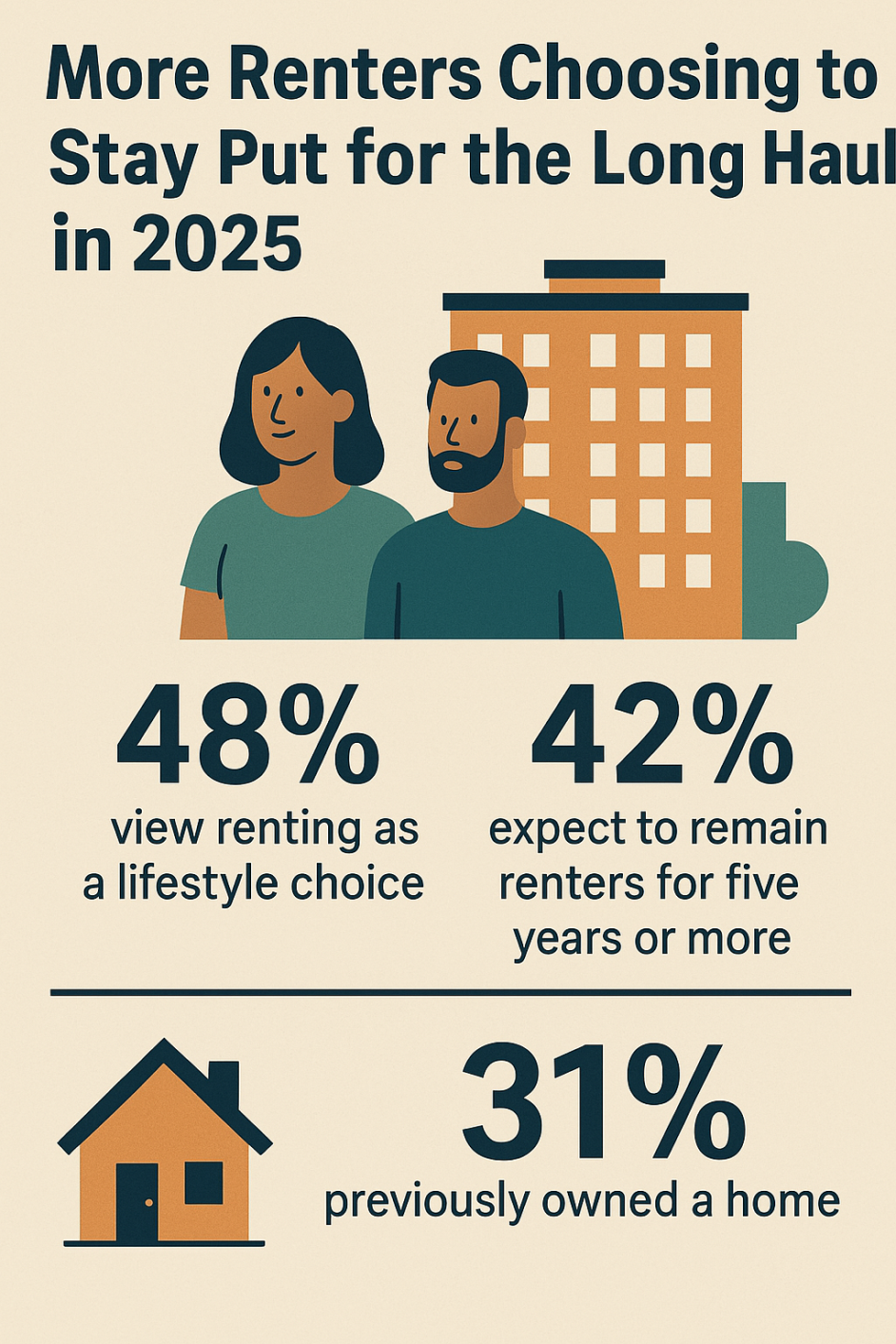
Knightvest Capital’s 2024–2025 Multifamily Renter Sentiment Report highlights a continued shift in attitudes around homeownership—and it’s a shift that works in favor of rental property investors. According to the report, nearly half of renters surveyed (48%) are choosing to rent rather than feeling forced into it, and 42% say they now view renting as a long-term living arrangement.

Affordability still tops the list of reasons people rent, with 63% citing the high cost of buying a home. But other factors are playing a growing role, including reduced maintenance responsibilities (59%) and flexibility to relocate (34%). Interestingly, about one-third of those surveyed previously owned a home, which reinforces that the preference for renting isn’t always about cost—it’s increasingly a lifestyle choice.

Read More

Redfin Joins Zillow in Blocking Listings Not First Shared via MLS

Redfin Follows Zillows lead on blocking non MLS Listings

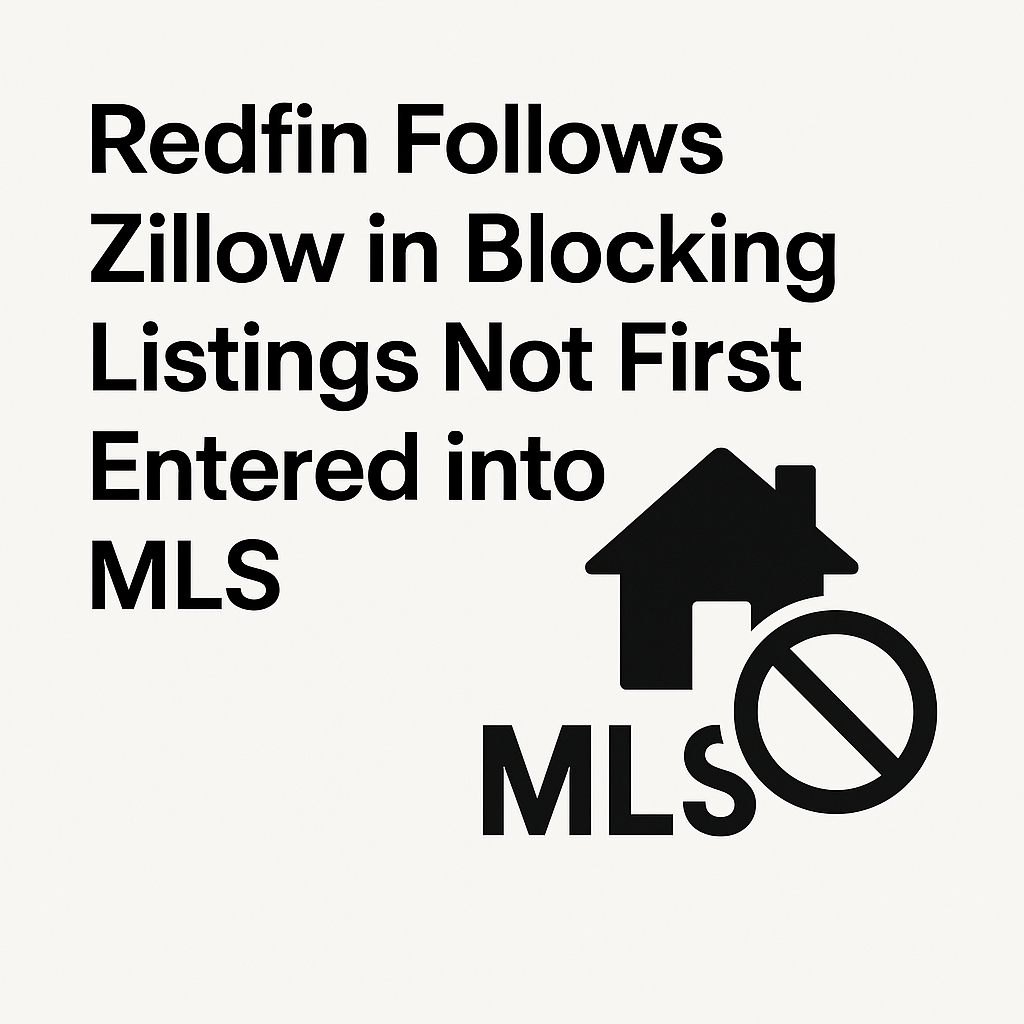
Glenn Kelman, CEO of Redfin, announced this week that Redfin.com will no longer display listings that were publicly marketed before being shared through the MLS. In a post published April 14th on Redfin’s blog, Kelman stated, “Because we believe that all buyers should be able to see all listings, Redfin.com will not publish any listings that have been publicly marketed before being shared with all real estate websites via the MLS.” In an effort to support this approach, he also called on MLSs to adopt a coming-soon designation that hides days on market and price changes, features often cited by agents and sellers as barriers to listing early on the MLS.

Read More

Zillow and Compass Tackle NAR Clear Cooperation Policy from Opposite Angles

Public vs Private Listings- Zillow vs Compass

Moments ago, Zillow announced new listing access standards aligned with the National Association of REALTORS® (NAR) Clear Cooperation Policy, taking a firm stance on listing transparency. According to Zillow’s press release, the standards, effective May 2025, emphasize that any property publicly marketed must be listed on the MLS within one day and also displayed on Zillow and other platforms receiving MLS feeds.

Zillow’s release states clearly, “If a listing is marketed directly to consumers without being listed on the MLS and made widely available where buyers search for homes, it will not be published on Zillow.” They justify this position by arguing selective access to listings “create confusion, harm consumers, and erode trust in the marketplace.”

Read More