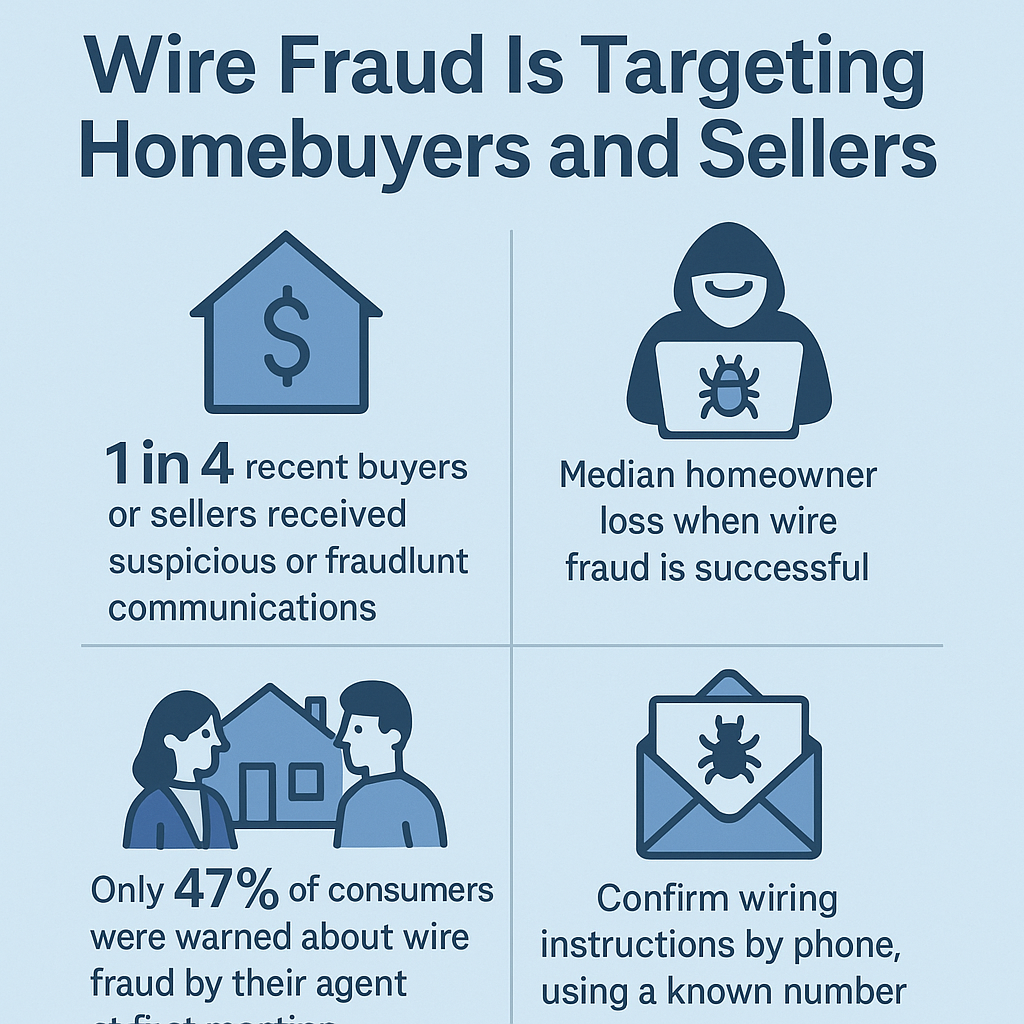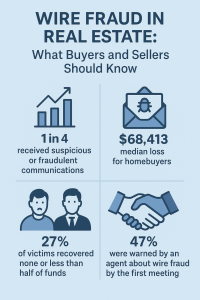

Wire Fraud Is Targeting Homebuyers and Sellers – and Most Don’t Even Know It’s Happening

Welcome to real estate insights born from many years “in the trenches.” This site cuts through the theory to deliver down-to-earth, field-tested advice for homeowners, buyers, and industry pros—covering everything from buying and selling to investing and development. It’s all practical knowledge for making smarter property decisions.
Latest news on real estate laws, regulations, and policy changes impacting the market.

There’s a massive piece of legislation working its way through Congress right now… fittingly titled The One, Big, Beautiful Bill… and it includes several key provisions that could deliver real value to homeowners, investors, and real estate professionals alike.
Let’s start with taxes… the bill locks in the lower income tax brackets from the Tax Cuts and Jobs Act, preventing a tax hike in 2026. It also makes the higher standard deduction permanent… meaning more take-home pay for many households. In 2026, for example, a married couple filing jointly would get a $32,600 deduction under this proposal… double what it would be otherwise.

Well, here we go again—another big real estate lawsuit, but this one has a local twist and a broader punch. Compass just sued the Northwest MLS, and unlike some of the class-action commission suits making headlines, this one is very focused on listing control, competition, and, ultimately, the consumer’s right to choose how their home is marketed.
At the heart of Compass’s complaint is the claim that NWMLS, which is owned and governed by traditional brokerage firms, is shutting down competition by refusing to allow office-exclusive listings—something that’s allowed in every other state. Compass argues this isn’t just hurting them; it’s hurting homeowners too, by stripping away an option that many sellers clearly want. In fact, nearly half of Compass sellers nationwide used their pre-marketing strategy—what they call “Private Exclusives”—in Q1 this year, and in Seattle, over a third of Compass clients jumped on the offering within just a week of it being available. Then, NWMLS pulled the plug.

If you’re thinking about buying or selling a home—whether you’re working with a real estate agent or exploring other options—there’s a major shift underway that could soon impact your choices and your bottom line.
Roger Alford, a former law professor and antitrust enforcer with the U.S. Department of Justice (DOJ), has just been appointed to one of the most powerful antitrust positions in the federal government. This may sound like insider legal news, but it has very real consequences for anyone trying to navigate the housing market.

In my previous article on April 3, 2025, “DOJ Picks Roger Alford—What it Means for NAR, Clear Cooperation, and the Future of MLS,” I emphasized how significant Alford’s appointment to the Department of Justice (DOJ) Antitrust Division would be for the real estate industry. Given Alford’s background as an expert witness in the landmark Sitzer/Burnett case against NAR, his views and potential policy direction are particularly influential.
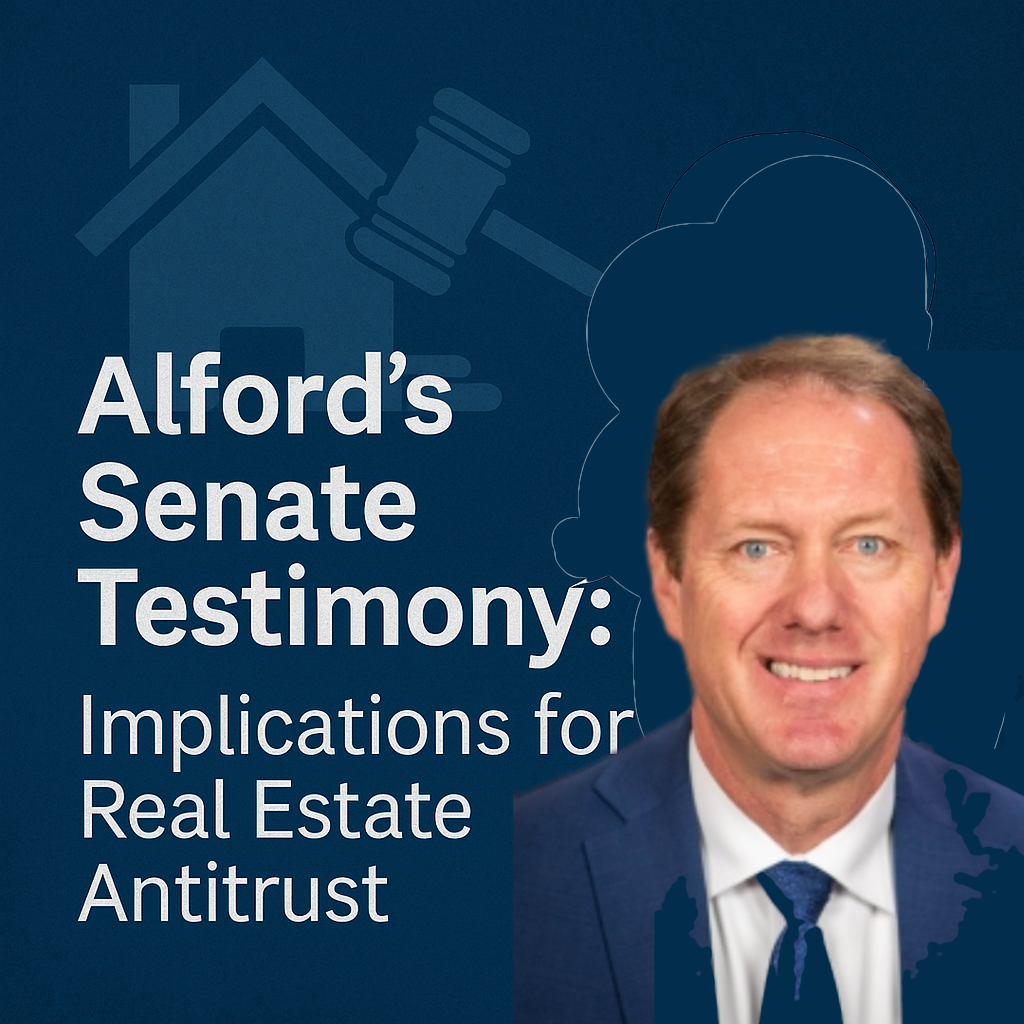
Roger Alford’s testimony before the Wisconsin Senate on December 19, 2023, underscores exactly why his appointment should concern every professional in real estate. In advocating for Wisconsin Senate Bill 394, Alford highlighted the critical importance of online platforms in home sales, particularly emphasizing FSBO (For Sale By Owner) sellers who, without internet exposure on popular sites like Zillow and Redfin, face severe market disadvantages. He detailed how traditional commission structures could erase years of equity gains, directly criticizing the industry’s approach to commissions as anti-competitive.

There’s been a major development at the Department of Justice (DOJ) that’s got my attention, and it should have yours too. Roger Alford, a law professor from Notre Dame with extensive antitrust experience—most notably as an expert witness for plaintiffs in the landmark 2023 Sitzer/Burnett lawsuit against the National Association of REALTORS® (NAR)—has just been appointed Principal Deputy Assistant Attorney General for the DOJ’s Antitrust Division. To put it plainly, that’s big news for real estate.
I’ve written extensively about how DOJ scrutiny is reshaping our industry, particularly regarding policies like Clear Cooperation and mandatory REALTOR® membership for MLS access. Alford’s appointment signals loud and clear that the DOJ isn’t backing off anytime soon—in fact, they’re doubling down. In the Sitzer case, Alford testified that NAR’s Clear Cooperation Policy (CCP) isn’t designed to benefit sellers, but rather to preserve MLS monopoly power by cutting off alternative options for agents. With him now positioned at DOJ, expect intensified scrutiny around rules that limit competition.

Just days after attorney Michael Ketchmark publicly warned National Association of Realtors (NAR) brokers about potential legal repercussions if they vote to maintain the controversial Clear Cooperation Policy (CCP), Compass has intensified the pressure. The brokerage giant recently sent letters to multiple MLSs, urging them to reconsider enforcing CCP, hinting strongly at litigation risks if they fail to act.
As Rob Hahn outlined in his recent analysis, Compass’s message to MLSs was clear: adopt flexible enforcement models similar to those already implemented by key MLSs such as Bright, SFAR, and MRED, or risk being targeted in court. Hahn noted the letter contained “a suggestion with a hint of threat: ‘your MLS is subject to litigation risk’ and ‘would create additional legal risks.’”

The National Association of Realtors (NAR) is on the verge of making a pivotal decision about its controversial Clear Cooperation Policy (CCP)—a rule requiring listings to be submitted to a multiple listing service (MLS) within one business day of public marketing. Now, attorney Michael Ketchmark, lead counsel in the landmark Sitzer lawsuit, has issued a stark warning: if NAR brokers vote to maintain the rule, he may take legal action against them.
Ketchmark, in an interview with Inman News, made his stance clear: “It’s my expectation that after this meeting, when this comes to a NAR vote overall, that they’ll do the right thing and remove that policy and let the free market continue to work.” He added that if the rule remains, his firm will scrutinize the motivations of those involved and determine whether anti-competitive behavior is at play. “We’ll take the depositions of the people involved and figure out exactly why they did that and what was the motivation behind it, and then make a decision at that point on how to proceed,” Ketchmark told Inman.